
Webbing often looks simple on a sample card, but it becomes a costly problem when the finished product needs a different hand feel, cleaner hardware movement, or more reliable stitching than the approved strap can deliver. Buyers usually get better results when they define the job first and the material second.
Start with the working role of the strap
Before comparing samples or prices, it helps to decide how the webbing will behave in the product.
- Load role: carrying handles, shoulder straps and restraint points usually create different sourcing priorities.
- Contact role: straps that touch the hand, shoulder or pet body should be reviewed for feel as well as strength.
- Assembly role: folding, bartacking, riveting, heat cutting and buckle movement can change what construction works best.
- Environment role: outdoor exposure, moisture, dirt and repeated flexing can quickly separate a suitable webbing from an unsuitable one.
Material comparison is only the starting point
Buyers frequently compare polypropylene, polyester and nylon webbings because each one suits a different commercial brief.
- Polypropylene webbing is commonly reviewed for lightweight, value-focused strap programs.
- Polyester webbing is often preferred when lower stretch and outdoor-use stability matter.
- Nylon webbing is frequently considered where flexibility, feel and abrasion-related performance are important.
Those category cues are useful, but the final decision still needs to be confirmed against the actual product, hardware fit and use conditions.
Construction details buyers should review early
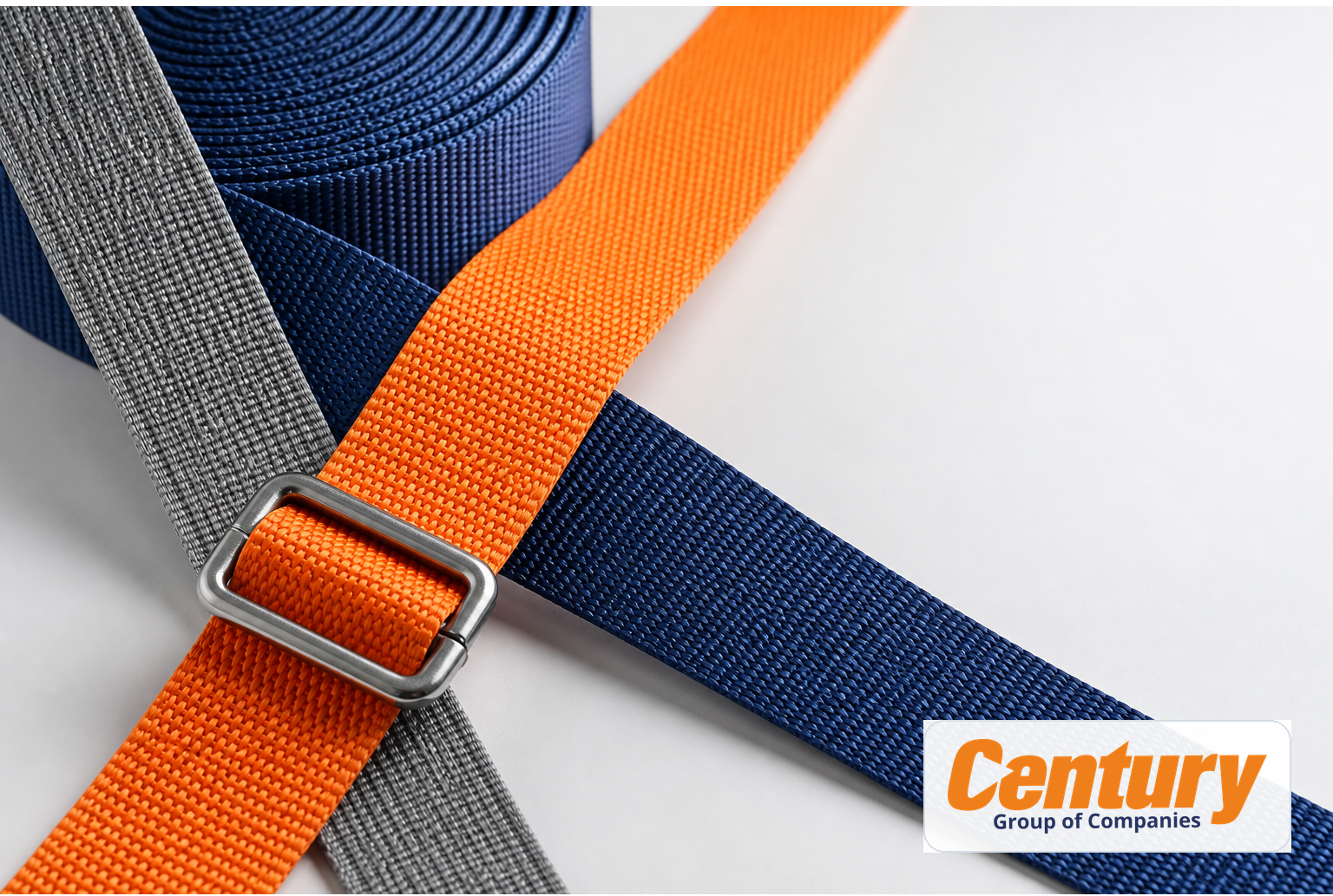
- Width consistency: important for buckles, sliders, rings and repeatable sewing.
- Thickness and stiffness: these affect both comfort and assembly behavior.
- Edge finish: rough or unstable edges can hurt handling and visible product quality.
- Weave density: this changes feel, structure and how the strap behaves after repeated use.
- Cut-edge behavior: production teams should confirm whether the webbing seals and finishes cleanly.
Where buyers commonly use webbing
- Bags and backpacks: handles, shoulder straps, closures and reinforcement points.
- Pet products: collars, leashes, harness straps and adjustment sections.
- Outdoor and utility products: loops, tie-downs, securing straps and equipment attachments.
- Industrial applications: general-purpose restraint, bundling and narrow-fabric use.
- Furniture and lifestyle products: support straps and functional trim applications.
Questions that reduce sourcing mistakes
- Does the webbing need to move smoothly through existing hardware dimensions?
- Will the finished product require a softer hand feel or a firmer structure?
- Is colour consistency important because the webbing stays visible in the final product?
- Will the strap face outdoor use, repeated cleaning or rough handling?
- Should sample approval include stitching, folding and real-use handling instead of visual review alone?
Why flat-sample approval is not enough
A webbing sample can look acceptable in isolation and still create trouble in production. Better approval processes check the strap in the real assembly: through the intended hardware, under the actual stitching pattern, and after repeated handling. That is usually where fit problems show up.
FAQ
What is industrial webbing used for?
Industrial webbing is widely used for handles, straps, adjustment sections, reinforcement, restraint and utility functions across bags, pet products, outdoor goods and many narrow-fabric applications.
How do buyers compare nylon, polyester and polypropylene webbing?
Buyers typically compare feel, stretch behavior, outdoor suitability, hardware compatibility, target cost and how the strap performs in the actual end product.
What should be checked before bulk ordering?
Confirm the width, thickness, hand feel, hardware fit, edge finish, use conditions and assembly performance before scaling the order.