
Twine is easy to underestimate because it looks simple on the shelf, but B2B buyers usually run into problems when they treat every twine as the same product. In practice, the right order depends on where the twine will be used, how often it will be handled, whether product presentation matters, and whether the job favors natural fiber or synthetic performance.
Why Twine Orders Go Wrong
Most supply issues begin with a vague request. A buyer asks for twine without defining whether the requirement is for carton bundling, retail presentation, food-related tying, plant support, or general utility work. That gap creates avoidable risk because each use case asks for a different balance of strength, handling, appearance, moisture behavior, and repeat-order consistency.
Commercial Uses Buyers Commonly Review
- Packaging and bundling: tying cartons, grouped packs, tags, inserts, and lightweight product bundles.
- Food-related tying jobs: cotton-based butcher or cooking twine for product preparation workflows where buyers need to confirm suitability before approval.
- Gardening and horticulture: crop support, greenhouse tying, nursery work, and seasonal garden supply programs.
- Craft and retail presentation: natural-looking tying for gift packs, rustic branding, and hand-finished product presentation.
- General utility: light-duty warehouse, workshop, or store use where operators need a twine that ties cleanly and performs consistently.
How Buyers Usually Narrow the Product
1. Start with the actual end use
The first question is not the color or spool size. It is the job. A twine used in food handling should not be chosen the same way as one used for plant support or utility bundling. Once the application is clear, the material discussion becomes more accurate and faster.
2. Decide whether natural or synthetic behavior fits better
Natural-fiber twines are often preferred when visual texture, biodegradable positioning, or softer handling matter. Synthetic options are more often considered when buyers expect more exposure to moisture, longer service life, or routine utility use. Buyers who skip this step often end up paying twice through reordering or operator complaints.
3. Check handling, not only break strength
Twine that is technically strong but awkward to knot or unwind can slow packing lines and frustrate teams doing repetitive tying work. Smooth handling, consistent winding, and predictable knotting matter because they affect real daily productivity.
4. Review repeat-supply expectations
If twine is becoming part of a standing packaging or supply program, consistency matters as much as the first sample. Procurement teams should align the order with the actual frequency of use, replacement rhythm, and expected visual consistency across repeat orders.
Material Direction Buyers Commonly Use
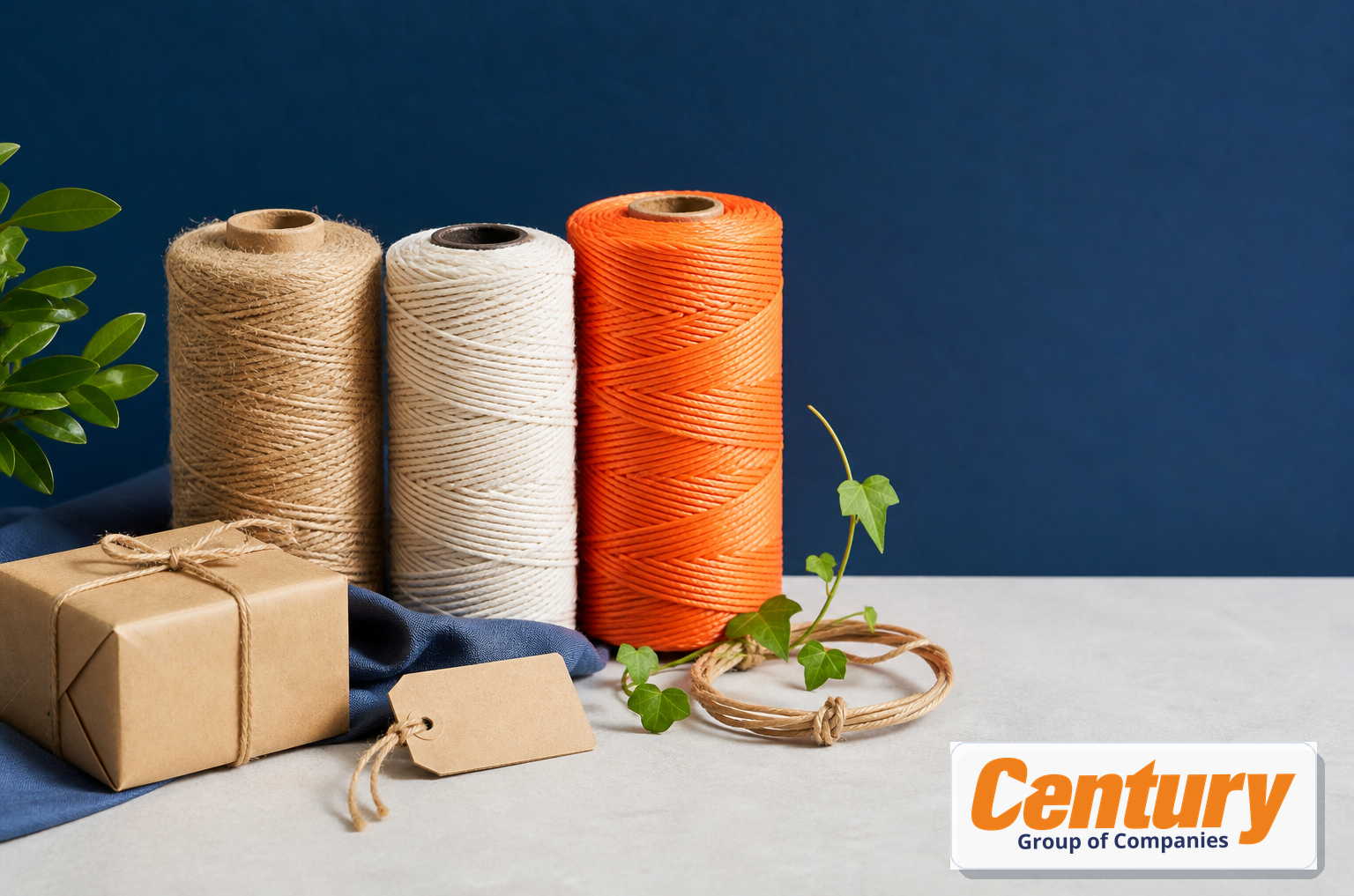
- Cotton twine: often associated with soft handling and food-related tying jobs.
- Jute twine: commonly linked with gardening, crafts, and natural-looking packaging or presentation.
- Synthetic twine: often considered for agricultural, bundling, and utility work where weather exposure or longer wear can matter.
Questions Worth Sending to a Supplier Before Approval
- What exact job will the twine perform every day?
- Will it be used by hand, in packing stations, or in outdoor conditions?
- Does the requirement favor natural appearance, food-use discussion, or moisture resistance?
- How important are knot consistency, spool handling, and repeat-order uniformity?
- Does the team need a one-time buy or a regular supply program?
Where Century Fits
Century's official site identifies New Century Filaments Pvt. Ltd. as a manufacturer and exporter of yarns, threads, twines, narrow woven fabrics, ropes and cordages, pet accessories, and packaging bags. For buyers, that verified product-range position makes Century relevant when the requirement needs a supplier conversation around application fit and repeat supply rather than a one-line commodity order.
FAQ
How do buyers choose between cotton, jute, and synthetic twine?
Start with the use case. Cotton is commonly linked with food-related tying, jute with gardening or natural presentation, and synthetic options with utility or heavier-duty outdoor handling.
Is twine only a packaging product?
No. Twine is also used in horticulture, food preparation workflows, retail presentation, and agricultural tying jobs.
What should a buyer confirm before placing a larger order?
Confirm the actual application, expected handling conditions, and any material-specific requirement before locking a repeat supply program.