
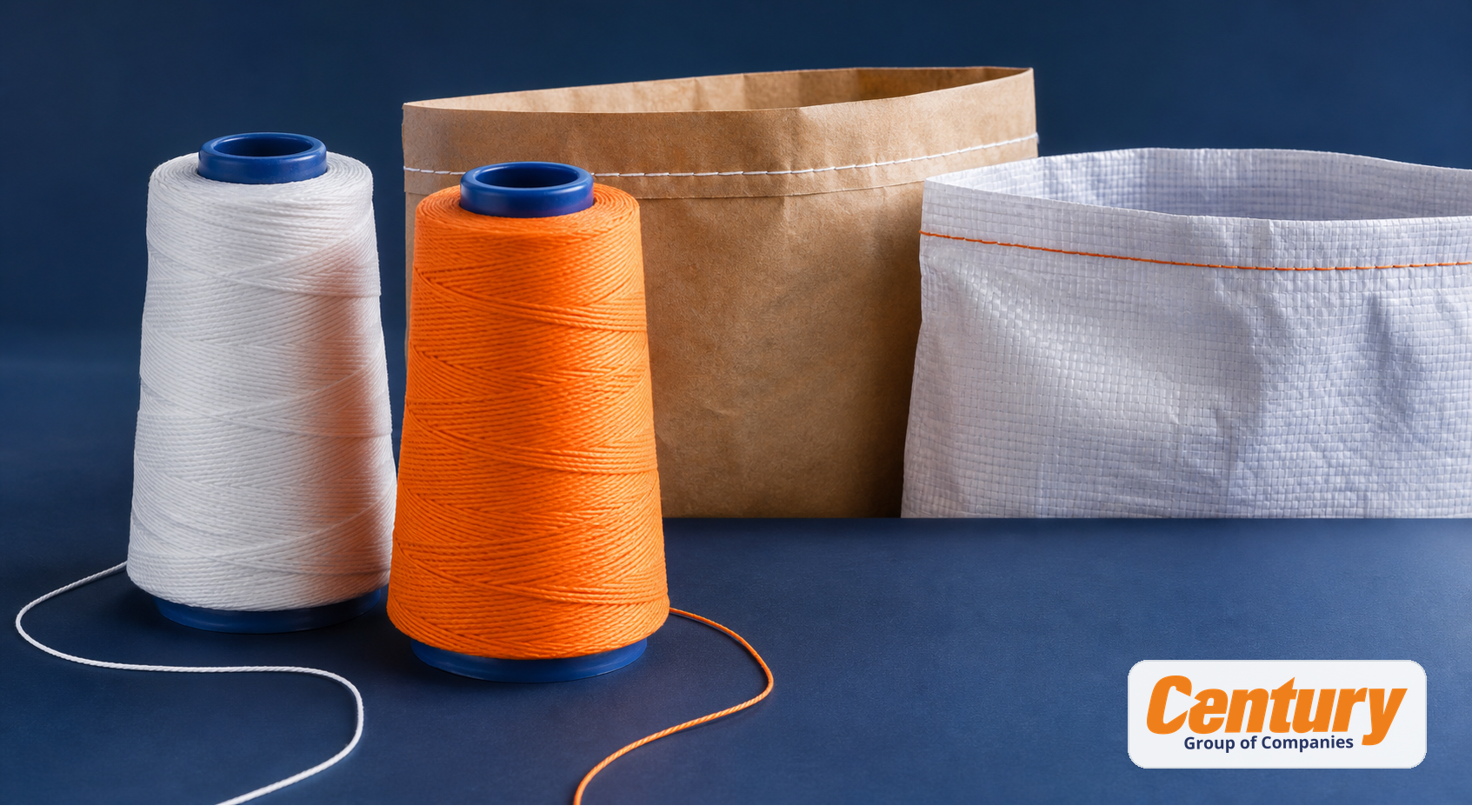
Bag closing thread looks like a small consumable until a packaging line starts missing stitches, creating uneven seams or stopping for frequent thread changes. For buyers handling food ingredients, feed, seeds, minerals or bulk industrial products, the thread choice affects seam consistency, machine performance and bag integrity at dispatch.
That is why sourcing should begin with the bag style, product flow and closure method instead of buying thread as a generic line item.
Start with the bag material and closure method
Industrial bag sewing is commonly used on open-mouth bags made from paper, woven polypropylene, PE, PP, jute and other complex materials. Depending on the line, the closure may be plain sewing, sewing with crepe paper or sewing a folded bag top.
Those differences matter because the thread has to perform inside a specific sewing setup rather than in isolation.
- Paper bags: buyers usually focus on clean stitch formation, stable tension and a seam that supports handling through warehousing and transport.
- Woven PP bags: friction, needle interaction and stitch hold become more important, especially on higher-volume lines.
- Laminated or lined bags: the closure system may need confirmation across the outer bag material and the inner liner arrangement.
- Crepe-assisted or folded-top closures: the thread must run consistently with the chosen closing method and machine setup.
Buyer questions that should be answered before ordering
- What exact bag material and fill weight range is the line running?
- Is the bag being closed by plain sewing, folded-top sewing or sewing with crepe paper?
- Will the thread run on portable sewing machines, sewing heads or a fully integrated sewing system?
- Does the operation need single-thread or double-thread stitching?
- Is seam appearance mainly functional, or does the customer expect a cleaner retail-facing finish?
- What level of downtime is currently being caused by thread breaks, rethreading or seam inconsistency?
Where bag closing thread performance shows up on the production floor
Buyers often review thread after a machine issue appears, but the more practical approach is to connect thread choice to production conditions from the start.
- Stitch consistency: smoother running thread helps reduce irregular seams and rework.
- Line uptime: thread that matches the machine and bag material can help reduce unnecessary stoppages.
- Seam strength in handling: filled bags are lifted, stacked, palletized and moved repeatedly, so the closure must stay dependable through normal logistics.
- Compatibility with consumables: thread selection should be considered together with needles, crepe tape and the broader closing setup.
Common B2B applications for bag closing systems
Industrial bag sewing systems are widely used for filled open-mouth bags in categories such as flour, sugar, animal feed, potatoes, seeds, wood pellets, minerals and plastic granules. That broad application range is one reason buyers should avoid one-size-fits-all assumptions.
Why machine compatibility matters as much as thread price
Packaging teams often compare thread pricing first, but line compatibility usually has the bigger commercial effect. A lower-cost thread can become expensive when it increases stoppages, causes poor stitch formation or forces more operator intervention. Buyers get better outcomes when they evaluate thread together with machine model, operating speed, bag material and closure style.
Sample approval should happen on the actual line
Desk review is not enough. The most useful approval process is to run the thread in real production conditions with the intended bag material, needle setup and closure style. That reveals whether the seam remains consistent at line speed and whether operators can maintain output without avoidable interruptions.
FAQ
What is bag closing thread used for?
Bag closing thread is used to stitch the top of filled open-mouth bags in industrial packaging operations, including paper, woven PP and other bag formats.
What should buyers confirm before choosing a thread?
Confirm bag material, closure style, machine type, stitching method, production speed and seam requirements before finalizing the thread decision.
Why do packaging teams use crepe paper in some sewn closures?
Some bag sewing systems use crepe paper as part of the sewn closure method. Buyers should confirm the exact closing arrangement with the machine setup and bag type being used.
Can one thread work across every bag line?
Not always. Different bag materials, closure methods and machine setups can change what performs best, so line-specific validation is the safer approach.